
Highly Tested Florida Bar Exam Torts: Part 1
Last updated: March 2026
In this article
Florida torts are tested periodically on the Florida Bar Exam — not every administration, but often enough that they cannot be ignored. When torts do appear as an essay topic, the examiners tend to return to the same core issues, tested through familiar fact patterns rather than exhaustive doctrine.
A review of prior Florida essay exams shows that torts essays consistently center on negligence-based analysis, premises liability, comparative fault, vicarious liability, punitive damages, and recurring crossover issues such as ethics or damages. Other topics — like wrongful death, sovereign immunity, and emotional distress — appear less frequently, but carry significant point value when tested.
A common mistake in torts prep is treating the subject as either “all or nothing”: either memorizing every possible distinction, or skipping torts entirely because it isn’t guaranteed to appear. In practice, the examiners repeatedly test a small set of core tort principles, even when the surrounding facts change.
This three-part series focuses on the Florida torts rules that have actually been tested on prior Florida essay exams. The goal is not to cover every tort doctrine you might encounter in practice, but to help you prioritize the issues that consistently earn points when torts are tested.
Series overview:
Part 1: Core Negligence & Premises Liability
Part 2: Liability Theories, Wrongful Death & Government Liability
Part 3: Intentional Torts, Products Liability & Defamation
Studying for both the Florida essays and the MBE?
Florida torts essays test application, while the MBE tests doctrine. This article covers how torts are tested on the Florida essays. Our Ultimate Florida + MBE Bundle is designed for test takers who want broader exam coverage, including a strong doctrinal foundation in MBE torts and Florida coverage across other tested subjects.
Core Negligence Framework (Florida)
Many Florida torts essays are anchored in negligence principles. As a result, analysis often begins with duty, breach, causation, and damages, which then provides the framework for addressing more specific Florida tort issues.
Florida generally follows the same negligence structure tested on the MBE, but places particular emphasis on foreseeability, especially when defining duty and proximate cause.
Exam Insight (Feb 2026):
The February 2026 Florida Bar Exam again tested torts through a layered fact pattern involving premises liability and a defective product. The essay reinforced a common testing pattern: begin with negligence and premises analysis, then move into additional doctrines such as products liability or professional responsibility.
Duty
A duty exists where the defendant’s conduct creates a foreseeable risk of harm to others. At the duty stage, foreseeability focuses on whether the defendant’s conduct created a general risk, not whether the specific injury was predictable.
The standard of care depends on who the defendant is—for example, a professional, property owner, business operator, common carrier, or ordinary person.
When children are involved, Florida applies a modified standard of care. A child is held to the standard of a reasonably careful child of similar age, intelligence, and experience. However, when a child engages in an adult activity (such as operating a motor vehicle), the ordinary adult standard applies.
Essay Tip: Define duty, mention foreseeability, and identify the correct duty category (e.g., professional negligence, premises liability, ordinary negligence).
Breach
Breach asks whether the defendant failed to act as a reasonably prudent person under the circumstances. Florida essays often frame breach around what the defendant knew or should have known, and whether reasonable steps were taken to prevent foreseeable harm.
As with general negligence, breach may arise from:
- Affirmative conduct, or
- Failure to act where a duty to act exists.
No special Florida rule applies here—standard negligence principles control.
Causation
Florida requires both actual cause and proximate cause.
- Actual cause asks whether the injury would have occurred but for the defendant’s conduct.
- Proximate cause focuses on foreseeability and whether the defendant’s conduct was a substantial factor in bringing about the harm.
A superseding cause may break the chain of causation if it is independent, unforeseeable, and sufficient by itself to cause the injury.
Damages
A negligence claim in Florida requires actual, compensable damages. Nominal damages alone are insufficient.
Emotional Distress and the Impact Rule (Florida)
Florida generally applies the impact rule, which limits recovery for purely emotional distress in negligence cases. Under this rule, emotional damages are recoverable only when they flow from a physical impact or physical injury caused by the defendant’s negligence. The impact requirement is strictly applied in negligence cases, and emotional harm alone—no matter how foreseeable—is usually insufficient without a qualifying physical impact.
The impact does not need to be severe, but it must be more than trivial and must occur before or contemporaneously with the emotional harm. Emotional distress that arises without a qualifying physical impact is generally not compensable in ordinary negligence actions.
Florida recognizes that the impact rule is not universal. It does not apply to intentional torts or to certain narrowly defined categories of claims where emotional harm is the primary injury. However, unless the facts clearly place the issue into one of those limited categories, Florida essays default to the impact requirement.
Preexisting Conditions and Aggravation
Florida follows the eggshell plaintiff principle. A defendant takes the plaintiff as found and is liable for the full extent of harm caused, even when the plaintiff has a preexisting condition that makes the injury worse than expected.
Rather than treating this as a standalone doctrine, Florida addresses it through:
- Concurring cause analysis, and
- Aggravation of a preexisting condition in damages.
If the defendant’s negligence substantially contributes to the injury, liability is not avoided merely because the plaintiff was unusually susceptible to harm.
Defenses
Common defense arguments include:
- Comparative Negligence: The defendant argues the plaintiff’s own conduct contributed to the injury. This affects recovery, not liability, and is typically addressed when allocating fault.
- Open and Obvious Conditions: An open and obvious condition does not automatically eliminate liability. It is usually relevant to breach and comparative negligence.
- Lack of Notice: Especially in premises and slip-and-fall cases, defendants argue they lacked actual or constructive notice of the dangerous condition.
- Assumption of Risk: In Florida, this is generally treated as part of comparative negligence rather than as a complete bar.
- Superseding Cause: An independent, unforeseeable event may break the chain of causation and relieve the defendant of liability.
You do not need to label these as formal “defenses.” Simply addressing them naturally within breach, causation, or damages earns credit.
Statute of Limitations
For negligence claims accruing after March 24, 2023, the statute of limitations is two (2) years. Yes, this came about in 2023 and that is why you will find a lot of outlines that incorrectly reference four (4) years.
Tested on:
Feb-26 (Q3); Jul-23 (Q3); Feb-23 (Q3); Feb-22 (Q2); Feb-20 (Q2); Feb-19 (Q3); Jul-16 (Q3); Jul-15 (Q3)
Personal Note:
I like how the model answer for July 2023 (Q3) lays out the rules. It’s straightforward, succinct, and hits on the keywords that you need to rack in points.
Helpful References (Context Only – Not for Memorization):
- Florida Standard Jury Instruction (401.12 and 402.6)
- Hollie v. Radcliffe, 200 So. 2d 616 (Fla. 1st DCA 1967) (where a defendant’s negligence aggravates an existing condition, the defendant may be held responsible for the resulting injury)
- McCain v. Florida Power Corp., 593 So. 2d 500 (Fla. 1992) (shared here as a clear illustration of how Florida courts analyze duty, foreseeability, and proximate cause in a negligence claim)
- R.J. v. Humana of Florida, Inc., 652 So. 2d 360, 362 (Fla. 1995) (in negligence cases, recovery for emotional distress generally requires that the emotional harm flow from a physical impact or physical injury.)
Comparative Negligence & Allocation of Fault (Florida)
Florida now follows modified comparative negligence — effective March 24, 2023.
Under the current rule, a plaintiff may recover damages only if the plaintiff is 50% or less at fault.
If the plaintiff is more than 50% at fault, recovery is completely barred.
When recovery is allowed, damages are reduced by the plaintiff’s percentage of fault.
⚠️ This is a major change.
Florida followed pure comparative negligence before March 24, 2023. Many outlines — and even some commercial materials — still state the old rule incorrectly.
Here is What to Write on An Essay: Florida follows modified comparative negligence. The jury allocates fault among the plaintiff, defendants, and any properly identified non-parties. If the plaintiff is more than 50% at fault, recovery is barred. If the plaintiff is 50% or less at fault, damages are reduced by the plaintiff’s percentage of fault, and each defendant is liable only for their own share.
Allocation of Fault
Florida has abolished joint and several liability. Each defendant is liable only for their own percentage of fault, as determined by the factfinder. This remains a recurring Florida distinction in multi-defendant torts fact patterns.
Fault may be allocated among:
- Plaintiffs
- Defendants
- Properly identified non-parties
This means a plaintiff cannot recover the entire judgment from a single defendant; each defendant is responsible only for their own share of fault.
Seatbelt Defense
Florida permits a seatbelt defense as a form of comparative fault.
Failure to wear a seatbelt may reduce damages if the defendant proves that the failure contributed to the plaintiff’s injuries. It is not a complete bar to recovery and is typically analyzed as a damages-reduction issue.
Tested on:
Jul-23 (Q3), Feb-23 (Q3); Feb-22 (Q2); Feb-20 (Q2); Feb-19 (Q3); Jul-16 (Q3); Jul-15 (Q3)
Important Note: Nearly all of these exams predate the 2023 change and therefore apply pure comparative negligence.
Personal Note:
Take a look at July 2023. The organization is strong: a proper header (making it easy for the grader to award credit), identification of the statutory change, application to the facts, and a clear conclusion — all achieved in three sentences.
For a seatbelt defense example, see July 2015 (Q3) — just be mindful that it’s outdated on other points.
Fact Check:
Premises Liability
Florida premises liability analysis begins by determining the status of the injured person at the time of the injury. The duty owed — and the scope of the analysis — flows directly from that classification.
Invitees
Invitees are owed the highest duty of care and include those who enter the property for a purpose connected to the landowner’s business or a public purpose, such as customers in stores, apartment complexes, or other commercial premises.The landowner must:
- Maintain the premises in a reasonably safe condition
- Inspect for dangers
- Warn of known or reasonably discoverable hazards or should be discovered through reasonable care
Florida essays frequently test business invitees, especially in retail, grocery store, or commercial settings. The analysis often centers on foreseeability, notice, and reasonable inspection procedures, rather than whether a duty exists at all.
Licensees
Florida distinguishes between invited licensees and uninvited licensees, and the duty owed depends on which category applies.
Invited licensees are typically social guests. The landowner owes a duty to:
- Refrain from willful or wanton misconduct, and
- Warn of known dangers that are not open and obvious
There is no duty to inspect for unknown dangers.
Uninvited licensees enter the property with permission but without invitation and for their own purposes. The landowner owes a more limited duty:
- Refrain from willful or wanton misconduct, and
- Avoid intentionally exposing the licensee to danger
Unlike invited licensees, there is no duty to warn, even of known hazards.
Key Contrast:
Both categories are owed protection from intentional or reckless harm, but only invited licensees are entitled to warnings of known, non-obvious dangers. Neither category is owed a duty of inspection. See Barrio v. City of Miami Beach, 698 So. 2d 1241, 1243 (Fla. 3d DCA 1997) (illustrating Florida’s status-based duties and the limited duty owed to uninvited licensees).
An invited licensee has express permission to be on the property, an uninvited licensee has implied permission, and a trespasser has no permission at all.
Trespassers
Trespassers are owed the most limited duties.
A trespasser is someone who enters property without permission, invitation, or legal right, solely for their own purposes.
As a general rule, the landowner must:
- Refrain from willful or wanton misconduct, and
- Avoid intentionally exposing the trespasser to danger
If the trespasser is known or discovered, the landowner must also:
- Warn of known dangers that are not open and obvious
Florida recognizes special rules for child trespassers under the attractive nuisance doctrine.
Tested on:
Feb-22 (Q2); Feb-20 (Q2); Feb-19 (Q3); Jul-24 (Q3)
Personal Note:
Trespassers are mentioned briefly in one or two model answers. It’s worth keeping in mind and mentioning — an easy point if the facts clearly push the injured party outside invitee or licensee status.
February 2019 (Q3) is a great example of how this issue is tested. The essay starts with a strong core negligence discussion, then picks up additional points by clearly distinguishing between invitees and licensees and articulating the specific responsibilities of commercial property owners under Florida law.
July 2024 (Q3) is helpful in illustrating a neighbor visiting a tenant’s home who is treated as a licensee and was not warned of a non-obvious dangerous condition.
Slip-and-Fall: Transitory Foreign Substance
Florida slip-and-fall claims involving transitory foreign substances in a business establishment are governed by statute.
The plaintiff must prove that the business establishment had actual or constructive knowledge of the dangerous condition and should have taken action to remedy it.
Constructive knowledge may be proven by circumstantial evidence showing that:
- The dangerous condition existed for such a length of time that, in the exercise of ordinary care, the business establishment should have known of the condition; or
- The condition occurred with such regularity that it was foreseeable.
Evidence commonly used to establish constructive knowledge may include:
- The appearance of the substance
- Track marks or footprints
- Surveillance footage
- Prior similar incidents showing regularity
Tested on:
Feb-19 (Q3); Feb-20 (Q2); Feb-22 (Q2); Jul-24 (Q3)
Personal Note:
February 2020 (Q2) and February 2019 (Q3) are strong examples involving a shopper in a store and clearly illustrate the duties owed by a business establishment. Definitely worth reviewing.
Fact Check:
Dog Bites
Florida follows a statutory strict liability approach to dog bites.
A dog owner is liable for damages when their dog bites a person who is:
- In a public place, or
- Lawfully on private property (including the owner’s property)
Liability applies regardless of the dog’s prior viciousness or the owner’s knowledge of any dangerous tendencies. Florida does not follow a one-bite rule.
Lawful Presence
A person is considered lawfully on private property when they:
- Are performing a legal duty (such as a delivery or postal worker), or
- Are on the property by the owner’s express or implied invitation
Defenses and Limitations
- Comparative negligence applies. If the injured person’s own negligence contributed to the bite, damages are reduced accordingly.
- Provocation may reduce or bar recovery.
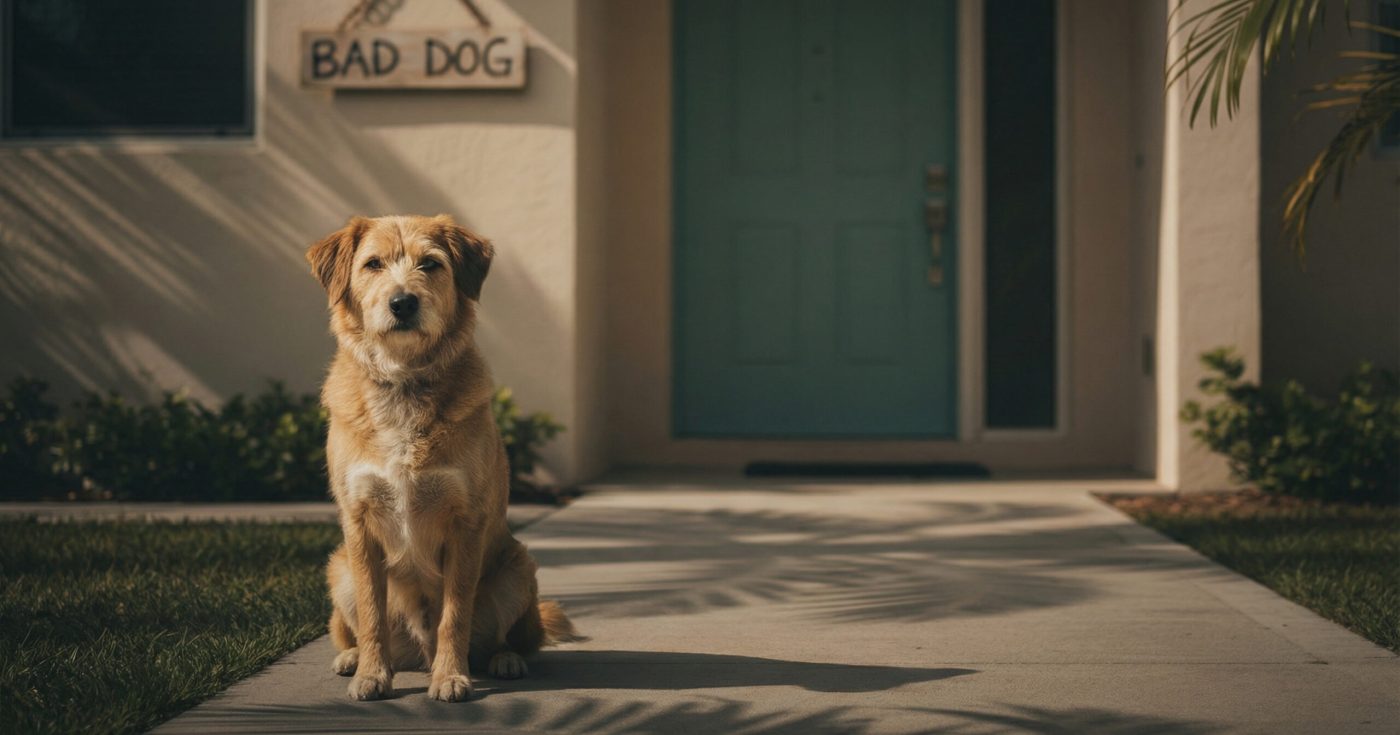
- A clearly posted “Bad Dog” sign limits the owner’s liability to economic damages only, unless:
- The injured person is under six years old, or
- The injury was caused by the owner’s own negligent act or omission
This statutory remedy exists in addition to any other remedies available under common law.
Tested on:
Feb-21 (Q2)
Personal Note:
Simply recognizing that Florida applies a special statutory framework to dog-bite cases — rather than a common-law one-bite rule — can help pick up easy points on an essay.
Fact Check:
Premises Liability Defenses
Florida premises liability defenses rarely operate as automatic bars to recovery. Instead, they usually show up as part of the breach or comparative negligence analysis.
Open and Obvious Conditions
An open and obvious condition does not automatically eliminate liability in Florida.
Instead, it is typically relevant to:
- Whether the defendant breached the duty of reasonable care, and
- Whether the plaintiff bears comparative fault.
Even where a condition is obvious, a landowner may still be liable if it was foreseeable that someone would be injured despite the condition.
Comparative Fault Overlay
Plaintiff conduct matters.
Inattentiveness, ignoring warnings, or knowingly encountering a condition may reduce recovery through comparative negligence rather than bar it outright.
Assumption of Risk
Florida generally treats assumption of risk as part of comparative fault, not as a separate complete defense.
On an essay, this is usually handled in one or two sentences and folded into the fault allocation discussion.
Tested on:
Feb-22 (Q2); Feb-20 (Q2); Feb-19 (Q3)
Personal Note:
Just flagging that Florida does not treat open and obvious conditions as an automatic defense can be an easy way to pick up points. Most essays are testing whether you place this issue in breach or comparative fault — not whether you know the label.
Landlord–Tenant Premises Liability
As a general rule, landlords are not liable for injuries occurring inside leased premises. However, important exceptions apply. A landlord may be liable for injuries arising from:
- Common areas under the landlord’s control,
- Known latent defects that were not disclosed at the time of leasing,
- Negligent repairs, and
- Failure to repair conditions the landlord agreed to maintain.
These issues often appear in crossover essays, especially when negligence is embedded in a property or torts fact pattern.
Tested on:
Jul-24 (Q3); Jul-22 (Q3)
Personal Note:
July 2024 (Q3) is a great example of how landlord liability is tested indirectly — not as a standalone issue, but layered into a broader negligence analysis.
Studying for both the Florida essays and the MBE?
Florida torts essays test application, while the MBE tests doctrine. This article covers how torts are tested on the Florida essays. Our Ultimate Florida + MBE Bundle is designed for test takers who want broader exam coverage, including a strong doctrinal foundation in MBE torts and Florida coverage across other tested subjects.
Final Thoughts: Where Negligence Ends and the Next Questions Begin
Part 1 focused on how tort liability is established under Florida law. In Florida torts essays, the analysis almost always begins with identifying the duty owed, whether that duty was breached, and how Florida-specific rules shape negligence and premises liability claims.
Once liability is established, however, the analysis rarely stops there. Florida torts questions often turn quickly to who is responsible for paying, what damages are available, and whether any statutory limits apply. Issues such as vicarious liability, wrongful death damages, punitive damages, and sovereign immunity do not change whether a defendant was negligent—but they often determine how much, if anything, a plaintiff can recover.
Part 2 picks up at that point, focusing on damages, liability allocation, and statutory limits that commonly appear after negligence has already been established.
Want to see how these issues are actually tested?
The Florida Board of Bar Examiners publishes prior Florida essay questions and model answers on its website. Reviewing the model answers alongside your study materials can help you see how examiners organize and award points.
You can access the essays and model answers here.